
For you, bi you
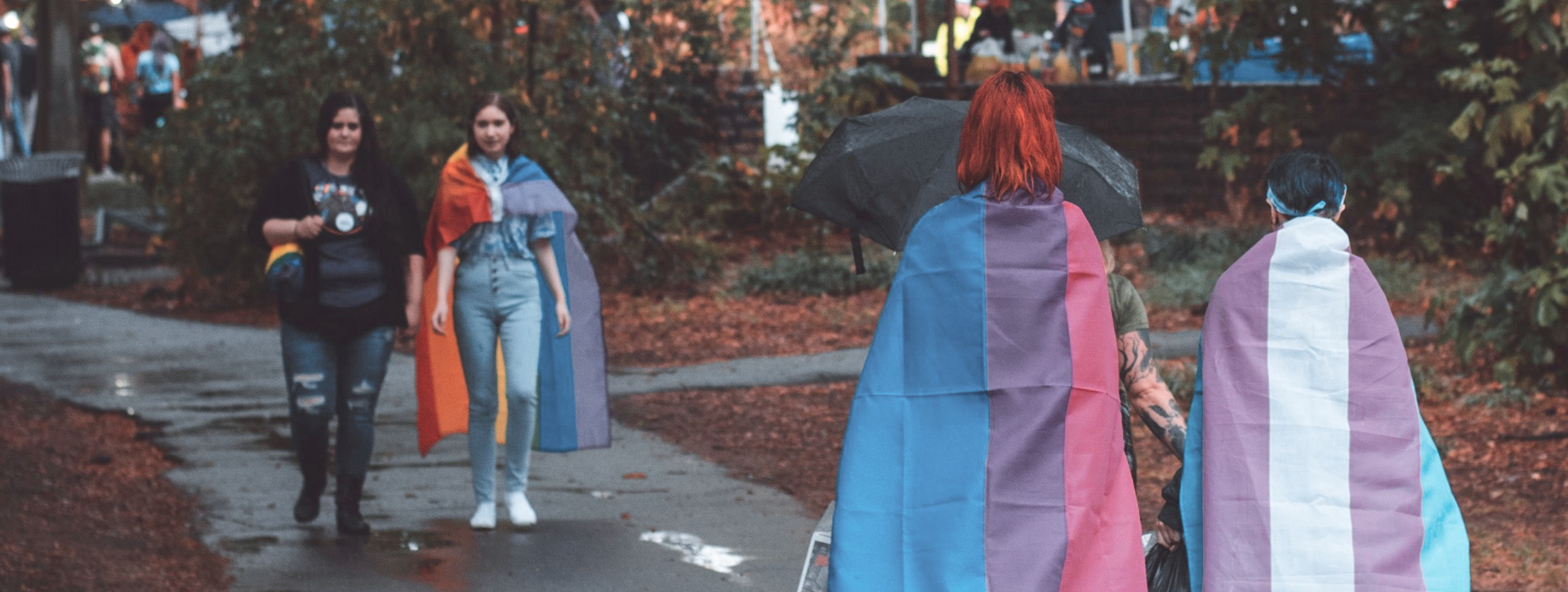
Bi+ Canada is here to support everyone under the broad bi+ umbrella, no matter how you identify or where you are across the country.
About us
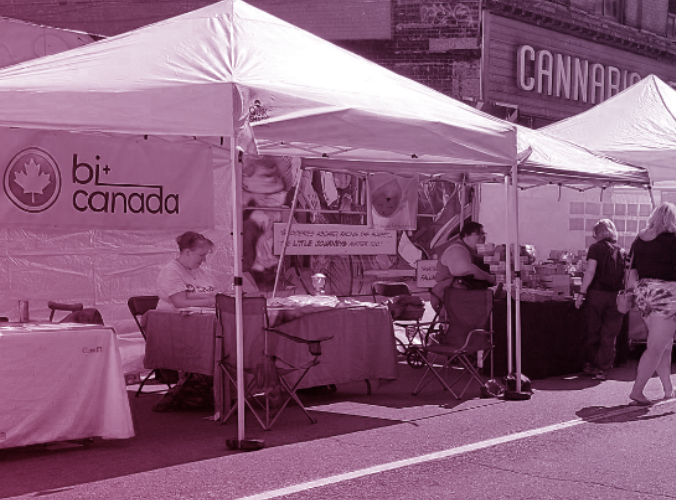
Learn more about who we are and why we do what we do.
Latest news
Sign up for our bi-monthly newsletter and get the latest information on the bi+ experience in Canada, including news, resources, events across the country, reviews of the latest bi+ books and entertainment, and ways to get involved.
Resources
Find information, resources, and links, for whether you are bi+, looking to support someone who is, or are an organization wanting to make sure you are including the largest part of the queer and trans community.
What is “bi+”?
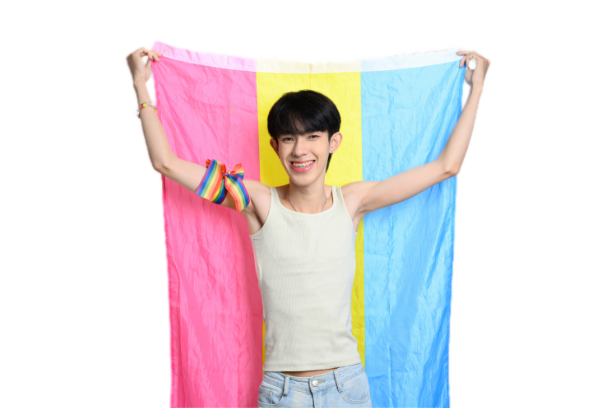
Bi+ Canada acknowledges and respects that many people who do or may experience multiple gender attraction use different terminology, including bisexual, pansexual, omnisexual, fluid, queer, mspec, heteroflexible, homoflexible, polysexual, and many others, or none at all. We use the umbrella interpretation of the terms “bi+” and “multiple gender attraction” to encompass the broadest scope of identities and experiences of those individuals and groups making up the majority of the 2SLGBTQ+ community, while in no way attempting to be prescriptive or excluding those using other or no terminology.
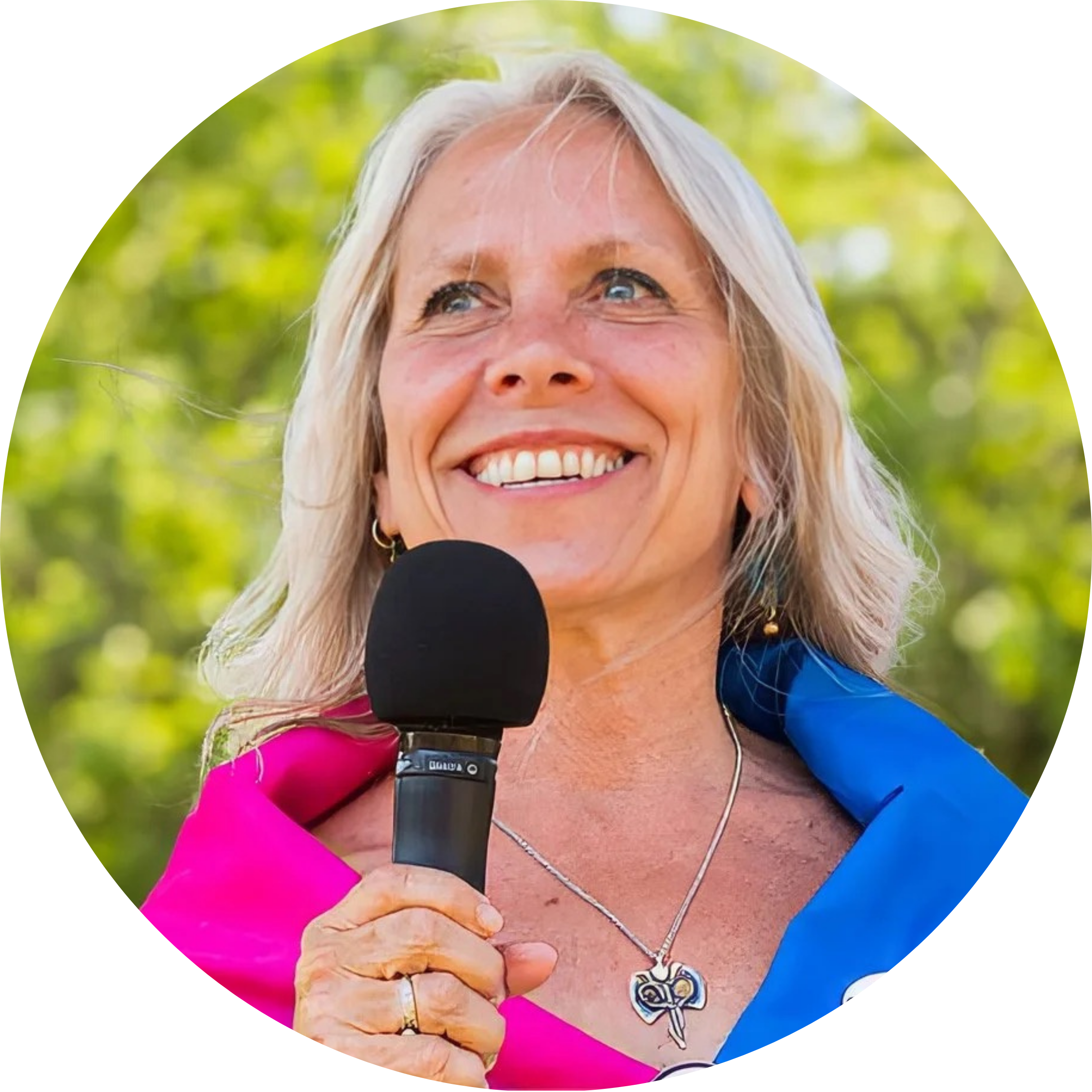
—Bi+ activist and community leader Robyn Ochs
“I call myself bisexual because I acknowledge that I have in myself the potential to be attracted—romantically and/or sexually—to people of more than one gender, not necessarily at the same time, in the same way, or to the same degree.”

Bi the numbers
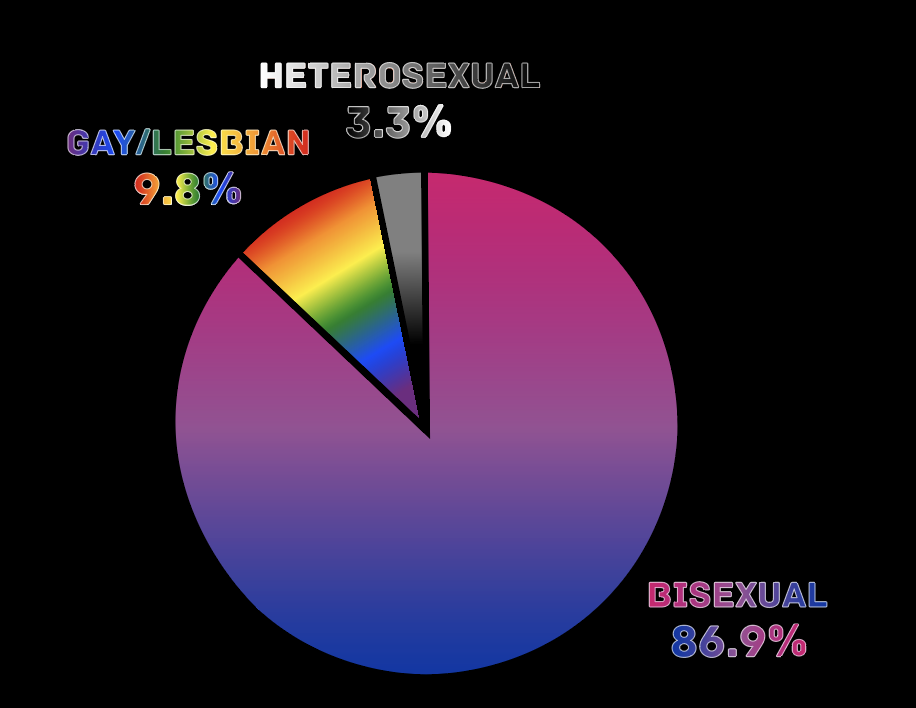
According to Statistics Canada, bisexuals make up 55% of Canada’s lesbian, gay and bisexual community, or 493,200 of the country’s 898,900 LGB people.
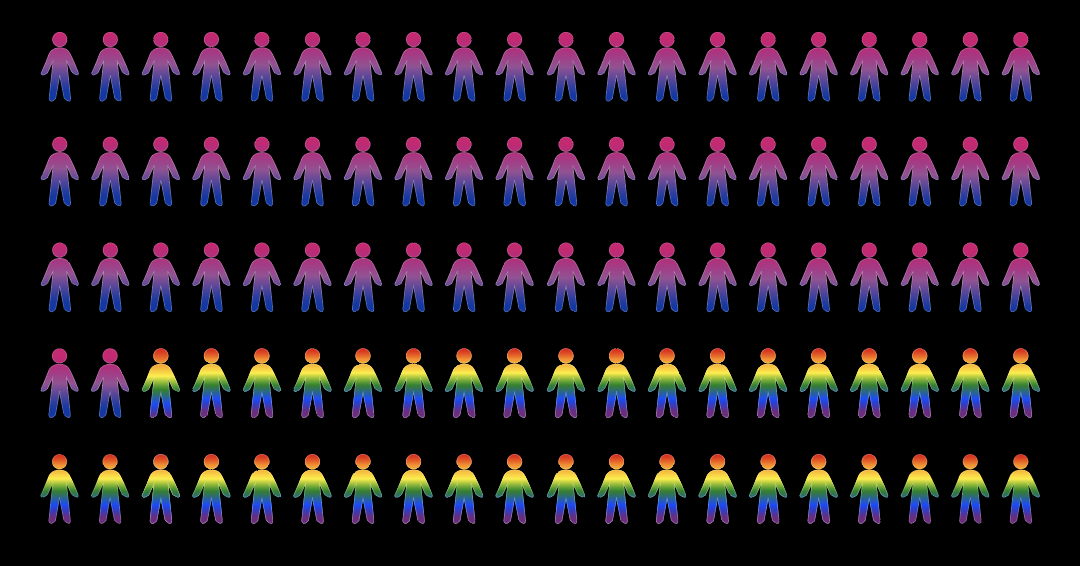
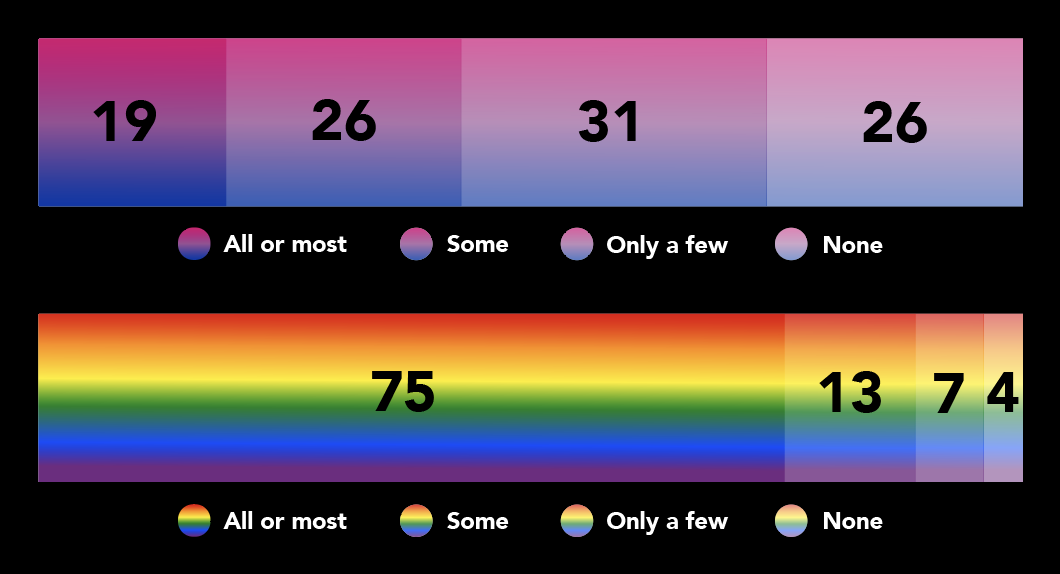
Of those, 33% identify as men and 66% as women. Men are the least likely to be out as bi+. According to a 2013 study by the U.S. Pew Research Centre, only 12% of men who identified as bisexual said they were out to the important people in their lives, compared to 77% of gay men.
Bisexuals face the highest rates of mental and physical illness of all orientations. Human Rights Campaign data tells us we are also most likely among all sexual orientations to face poverty, domestic violence, and
sexual assault.
More of us than ever
Research specifically on bi+ people in Canada is still sorely lacking, but data from outside our borders show significantly fewer bi+ people are out to friends, family, and colleagues than are our gay and lesbian counterparts. There are a range of intersecting reasons so many bi+ people, and particularly the majority of bi+ men, are not comfortable, safe, or otherwise able to be out. Yet, despite this, the number of folks describing themselves as fitting somewhere under the bi+ umbrella has steadily increased over recent decades, due largely to increased awareness, acceptance, and comfort levels.

Our amazing diversity
Since the bi+ population is a hugely intersectional group, helping the bisexual+ community means helping a huge range of people facing social, political, economic, and other forms of oppression stemming from biphobia often combined with a range of other factors, including transphobia, racism, sexism, ableism, classism, agism, and anti-sex-worker sentiment. Bi+ Canada’s goal is to help lift every one of us up together.